The UAE's property technology, or PropTech, market is expected to become an increasingly important part of the country's real estate sector as smart cities, digital infrastructure, and new property technologies continue to develop.
According to a recent market forecast cited by industry reports, the UAE PropTech market could grow from around AED 2.49 billion in 2025 to AED 5.95 billion by 2032, representing a projected compound annual growth rate of approximately 13.3%.
The forecast highlights how technology is becoming more closely connected with the way properties are designed, marketed, sold, managed, and experienced across the UAE.
What Is Driving PropTech Growth in the UAE?
PropTech covers a broad range of technologies used across the real estate industry. These include digital property platforms, artificial intelligence, virtual and augmented reality, smart-building systems, digital property management, and data-driven tools.
Several developments are supporting its growth in the UAE.
Smart Cities and Digital Infrastructure
The UAE's continued investment in smart-city development is creating more opportunities for technology to become part of residential communities, commercial buildings and mixed-use developments.
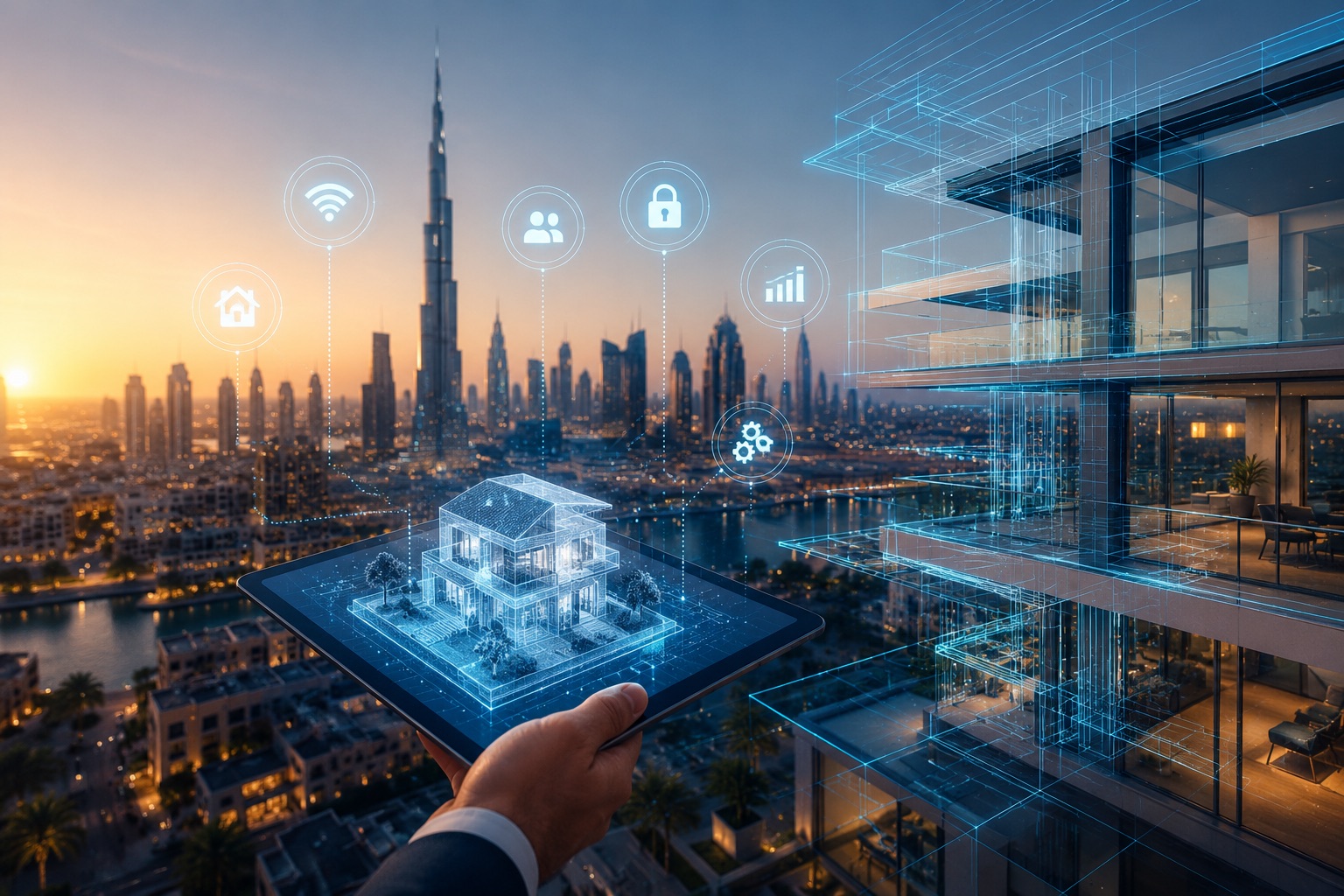
Connected building systems, digital services, automated facilities management and smart-home technologies are increasingly being incorporated into modern developments.
At the same time, stronger digital infrastructure is supporting activities such as online property searches, virtual viewings, digital communication and remote property management.
This is particularly relevant to the UAE's international property market, where buyers and investors may begin their search from outside the country.
VR and AR Are Changing Property Marketing
Virtual Reality (VR) and Augmented Reality (AR) are among the most visible applications of PropTech in real estate.
These technologies allow potential buyers to explore properties and developments digitally, including projects that are still under construction.
For off-plan developments, immersive experiences can provide buyers with a better understanding of layouts, interiors, and proposed communities beyond traditional floor plans and computer-generated images.
VR and AR can also support architects, developers and other project stakeholders during the design process by allowing proposed spaces and layouts to be viewed before construction advances.
PropTech Goes Beyond Buying and Selling
While property portals and virtual tours are often associated with PropTech, technology has a much wider role across the property lifecycle.
It can be used for:
- Property searches and digital listings
- Virtual property viewings
- VR and AR experiences
- Building design and visualisation
- Smart-home and smart-building systems
- Digital property management
- Facilities management
- Data analysis and reporting
- Customer relationship management
- Communication between landlords, tenants and property managers
This broader application is important because it means PropTech is not simply changing how properties are marketed. It can also influence how buildings operate and how residents interact with their homes and communities.
Artificial Intelligence Is Becoming More Relevant
Artificial intelligence is another area attracting attention across the real estate industry.
AI-powered tools can process large amounts of information and support activities such as market analysis, customer communication, property recommendations, and operational management.
For real estate companies, better access to data can provide useful insights into customer preferences, market activity and property performance.
However, technology does not replace the fundamentals of property investment. Factors such as location, pricing, rental demand, construction quality, infrastructure and service costs remain important when assessing a property.
PropTech is better viewed as a tool that can improve the way information is accessed and real estate services are delivered.
What Could PropTech Mean for UAE Real Estate?
The continued growth of PropTech could affect different parts of the UAE property market.
For buyers, digital tools can make property research more convenient. A potential buyer can explore developments online, compare properties and, in some cases, experience a property remotely before arranging a physical viewing.
Developers can use technology to present off-plan projects and communicate their designs to potential buyers. Property managers can also use digital systems to monitor buildings, manage maintenance, and communicate with residents.
This means the impact of PropTech extends across the property lifecycle rather than being limited to the sales process.