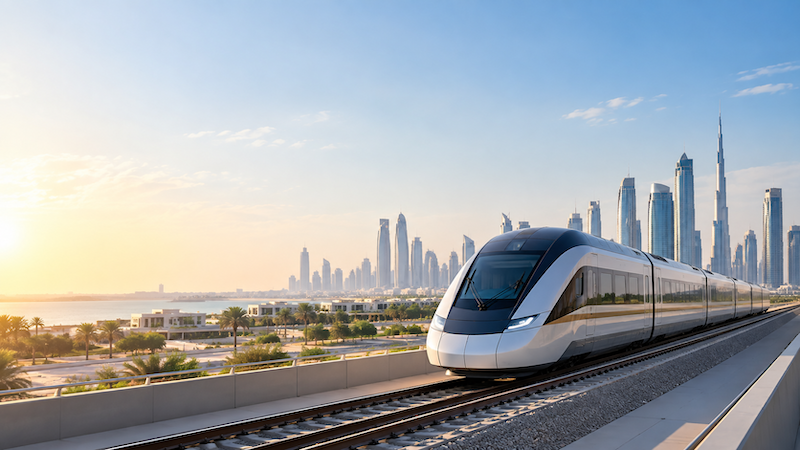
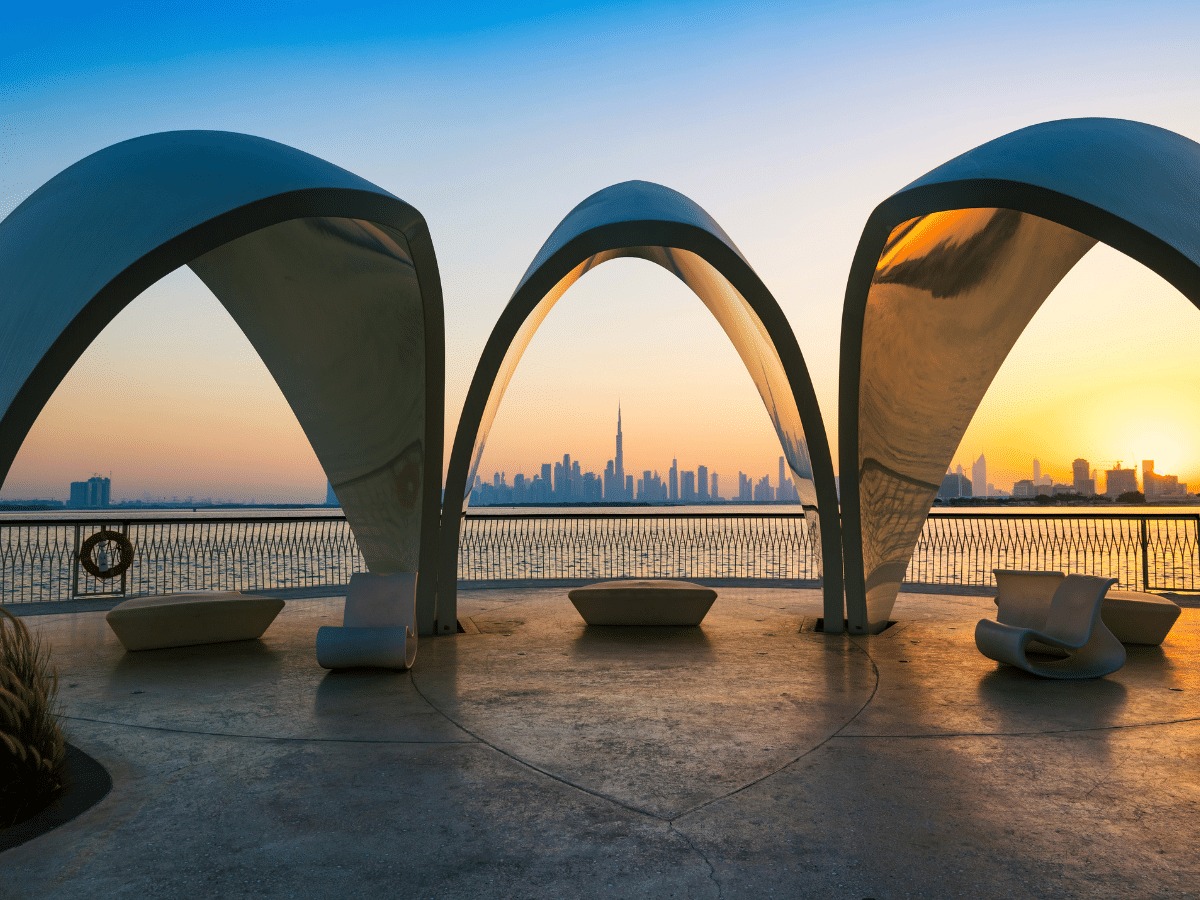
Major public transit expansions do more than ease daily travel, they fundamentally shift property demand, rental dynamics, and long-term land values. Scheduled to open on September 9, 2029 to mark the 20th anniversary of the Dubai Metro network, the Dubai Metro Blue Line represents an AED 20.5 billion investment spanning 30 kilometers and 14 modern transit stations.
While the new transit line connects critical centers across the emirate, including Dubai International Airport, Mirdif, Al Warqa, Dubai Silicon Oasis, Academic City, Ras Al Khor Industrial Area, and Dubai Festival City, market research and yield metrics highlight Dubai Creek Harbour and International City as the two communities set to experience the most significant economic shift.
Understanding how direct rail connectivity addresses current location challenges and accelerates rental demand gives buyers a clear blueprint for timing their purchases ahead of the 2029 launch.
The Dubai Metro Blue Line at a Glance
Before examining individual neighborhood impacts, here is a clear summary of the infrastructure scope:
- Target Opening Date: September 9, 2029 (coinciding with the 20th anniversary of the Dubai Metro)
- Total Track Length: 30 kilometers (15.5 km underground, 14.5 km elevated)
- Station Network: 14 stations (5 underground, 9 elevated)
- Key Interchanges: Direct transfer points at Centrepoint (Red Line), Creek Station (Green Line), and International City 1 (Blue Line Y-Junction)
- Expected Daily Ridership: Projected to serve over 200,000 daily passengers by 2030, scaling up to 320,000 passengers by 2040
Key Route Highlights
- Route 1 (Green Line Connection): Starts at Creek Interchange Station in Al Jaddaf, passing through Dubai Festival City, Dubai Creek Harbour, and Ras Al Khor before reaching International City 1. It then branches toward International City 2 and 3, Dubai Silicon Oasis, and Academic City.
- Route 2 (Red Line Connection): Begins at Centrepoint Interchange Station, moving through Mirdif and Al Warqa, and connecting directly to International City 1.
- Network Integration: RTA estimates travel times between destinations along the Blue Line route will range from 10 to 25 minutes.
Elevating Accessibility at Dubai Creek Harbour
Dubai Creek Harbour has earned its reputation as a flagship waterfront master development, known for contemporary residential towers, marina promenades, and skyline views. However, primary reliance on road access through major arterial highways has historically presented a mobility consideration for non-driving residents and daily commuters.
The addition of direct metro access resolves this accessibility barrier, integrating the community straight into Dubai's transit network.
What Metro Integration Means for Residents & Owners
- Elimination of Commute Friction: Direct connectivity shortens travel times to commercial districts like Business Bay and Downtown Dubai, as well as Dubai International Airport.
- Increased Tenant Demand: Properties near rapid transit options consistently experience higher occupancy rates and lower turnover periods compared to road-only waterfront enclaves.
- Architectural Anchor: The development will host an iconic 74-meter-tall elevated station designed by Skidmore, Owings & Merrill (SOM). Built to accommodate up to 160,000 daily passengers, it creates a focal point that enhances the immediate streetscape.
- Established Market Performance: Property Finder market indicators show average rental yields in Dubai Creek Harbour hovering around 5.6%, though performance varies based on specific building location, view, layout, and service fees.
Strengthening Rental Yields in International City
International City presents a distinctly different real estate profile compared to the luxury waterfront footprint of Dubai Creek Harbour. Known for accessible entry points and consistent tenant occupancy, International City regularly records some of the strongest gross rental yields across Dubai's apartment market.
The inclusion of multiple dedicated Blue Line stations across its phases transforms the area from a value-focused residential hub into a connected urban district.
Why Infrastructure Upgrades Drive Investor Returns
- High Daily Commuter Volume: A large percentage of International City residents rely on public transportation. Direct metro stations within walking distance significantly increase property appeal across all clusters.
- Largest Underground Interchange Hub: International City 1 will host the largest underground interchange station in the entire Dubai Metro network. Spanning over 44,000 square meters, it is built to handle up to 350,000 passengers per day as a central Y-junction hub.
- Capital Appreciation Upside: Yield-focused communities gaining rapid transit infrastructure historically see steady capital growth as transit-oriented convenience becomes factored into resale valuations. Property Finder listing data reflects an average gross rental yield of roughly 8.3% for International City, while Bayut transaction metrics highlight steady price adjustments.