License No.:CN-1100434 | Brokerage No.:202100982107
The Role of Foreign Investment in UAE Property Growth
Table of Contents
Our Expert Will Help You
Feel Free To Contact Us at Any Time ,We Are Online
24/7
WhatsappContact Us
Understanding the UAE’s Foreign Investment Landscape
Over the past decade, the United Arab Emirates has evolved into one of the most dynamic global real estate markets. Driven by open economic policies, investor-friendly regulations, and strategic urban planning, the UAE’s property sector has seen consistent foreign capital inflows. Cities like Dubai and Abu Dhabi have positioned themselves as leading international hubs where innovation meets infrastructure.
Foreign investment in the UAE real estate market surged after the introduction of freehold ownership laws, enabling non-GCC nationals to own properties in designated areas. This marked a turning point, transforming the UAE from a short-term expat rental market into a long-term ownership-driven environment.
The Impact of Regulatory Reforms on Property Ownership
Freehold Zones and Investor Confidence:
Legal reforms played a pivotal role in attracting global investors. Freehold zones such as Palm Jumeirah, Downtown Dubai, Yas Island, and Saadiyat Island allow full ownership rights for foreigners, boosting confidence and security in investment decisions. The implementation of transparent registration systems, escrow accounts, and developer regulations by the Dubai Land Department (DLD) and Abu Dhabi Department of Municipalities and Transport (DMT) further reinforced trust among international buyers.
Long-Term Residency and Visa Programs:
Policies such as the Golden Visa and Investor Visa have encouraged long-term residency for investors, fostering stability and continuity in property ownership. By linking property value thresholds to visa eligibility, the UAE effectively incentivized sustained foreign engagement, creating a steady demand for mid-to-luxury residential and commercial assets.
The Role of Foreign Capital in Market Expansion
Foreign capital not only fuels demand but also drives large-scale development and innovation. Contributions include:
- Diversification of the Buyer Base: Investors from Russia, India, China, and Europe have expanded market depth and stabilized demand cycles.
- Development of New Communities: Global investment has accelerated the rise of integrated communities like Dubai Hills Estate, Al Reem Island, and Saadiyat Lagoons.
- Boost to Construction and Allied Industries: Increased transactions support contractors, architects, and material suppliers, contributing to GDP growth.
- Portfolio Diversification for Global Investors: UAE real estate offers attractive yields, averaging 6–8%, significantly higher than global benchmarks in cities like London or Singapore.
Dubai and Abu Dhabi — Twin Engines of Real Estate Growth
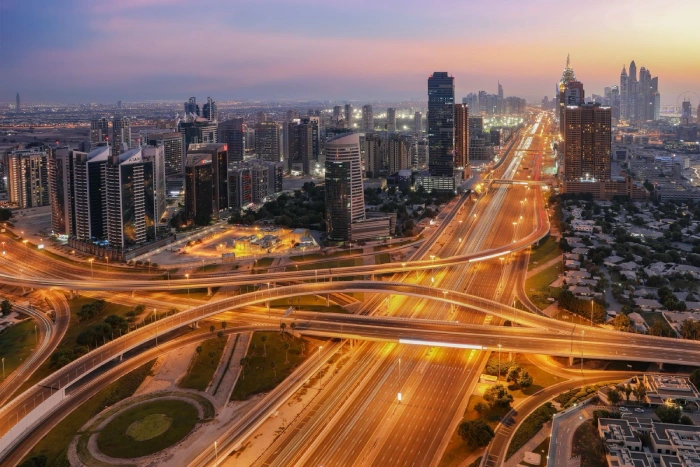
Dubai’s Global Magnetism:
Dubai’s property market continues to be the focal point for international investors. The city’s appeal lies in its strategic location, tax-free regime, and high liquidity. Neighborhoods like Business Bay, Jumeirah Village Circle (JVC), and Dubai Marina consistently attract both end-users and investors seeking capital appreciation and rental income.
Abu Dhabi’s Sustainable Investment Vision:
Abu Dhabi complements Dubai’s dynamism with long-term sustainability. Developments such as Yas Bay, Reem Island, and Al Raha Beach align with the emirate’s Economic Vision 2030, focusing on sustainable growth, cultural enrichment, and urban livability. Foreign investors have increasingly viewed Abu Dhabi as a stable market with strong yield potential and government-backed infrastructure expansion.
Economic and Policy Drivers Behind the Surge
The UAE’s economic diversification agenda—reducing reliance on oil and promoting real estate, tourism, and technology—has been a significant enabler. In addition, several macroeconomic factors have sustained growth:
- Stable Currency Pegged to USD, reducing exchange rate risks.
- Tax Incentives with no capital gains or property taxes.
- Strong Infrastructure Investment, including airports, ports, and logistics corridors.
- Hosting of Global Events, from Expo 2020 Dubai to COP28, enhancing international visibility.
These factors, combined with advanced digital property transactions and transparent data reporting, have strengthened the UAE’s image as a safe, well-regulated market for foreign capital.
Challenges and Future Outlook
While the influx of foreign investment continues to drive growth, the market also faces key challenges:
- Price Volatility: Rapid fluctuations linked to global economic trends.
- Oversupply in Certain Segments: Particularly in mid-market residential areas.
- Geopolitical Sensitivities: Shifts in global investor sentiment tied to regional or international developments.
Despite these challenges, the outlook remains robust. The UAE’s push toward smart cities, green building initiatives, and AI-driven property technologies indicates a forward-looking market capable of sustaining long-term investor confidence.
The Strategic Importance of Foreign Investment
Foreign investment plays a strategic role in shaping not only the real estate sector but also the UAE’s broader economic transformation. It stimulates innovation, strengthens global partnerships, and diversifies revenue streams. For the UAE, real estate investment is not merely about development—it’s about positioning the nation as a global economic powerhouse.
The UAE property market has matured into a transparent, profitable, and internationally recognized investment destination. Through sound governance, visionary leadership, and consistent policy reforms, the nation continues to attract high-net-worth individuals, institutional investors, and families seeking long-term stability and returns.
Explore Properties



Social Media
Nawayef Heights Type 6
Dubai roadshow in Abu Dhabi
Aldar Suhour X PSI