Smart buildings are becoming more common across the UAE as technology changes the way properties are managed, operated, and experienced.
For property owners, this goes beyond having smart devices. Building technology can help with energy use, maintenance, security, tenant comfort, and long-term property performance.
What Is a Smart Building?
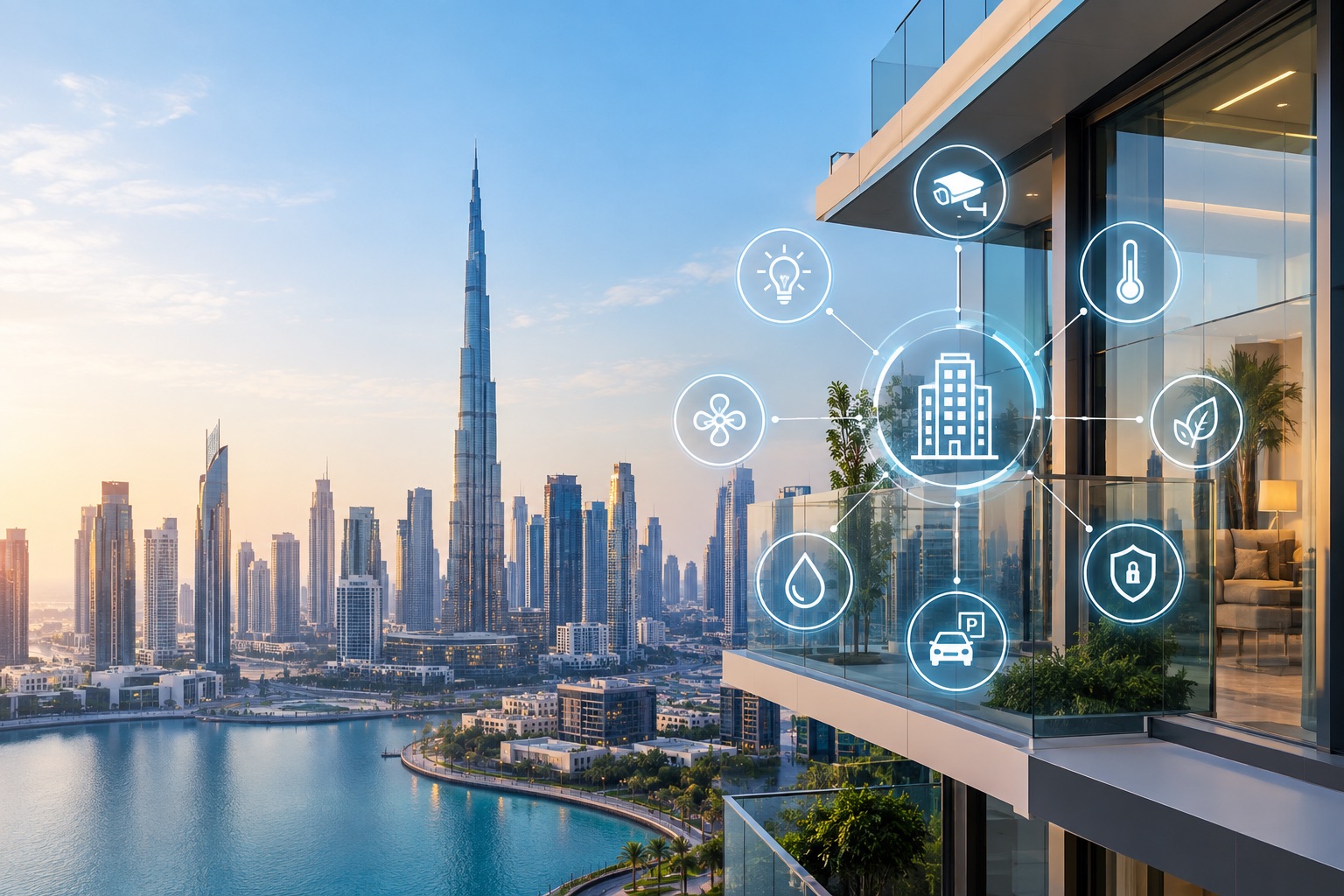
A smart building uses connected technology to monitor and manage different building systems. These systems can collect data and respond automatically to how a building is being used.
Common smart building systems include:
- Smart lighting controls
- Automated heating, ventilation, and air conditioning (HVAC)
- Smart electricity and water meters
- Building management systems
- Smart access and security systems
- Sensors for occupancy and air quality
- Automated parking systems
- Energy monitoring systems
- Predictive maintenance technology
- Solar energy and battery systems
The main difference between a conventional building and a smart building is how these systems work together.
Instead of managing lighting, cooling, security, and energy separately, connected systems can share information and adjust operations based on actual building use.
Dubai’s Al Shera’a building provides a large-scale example. Dubai’s Al Shera’a building, the headquarters of Dubai Electricity and Water Authority (DEWA), shows how AI, IoT, smart sensors, and automated building systems can work at scale.
Why Are Smart Buildings Growing in the UAE?
The UAE is investing in smart infrastructure, energy efficiency, and sustainable development. Both Dubai and Abu Dhabi have initiatives that support greener and more efficient buildings.
Dubai's green building regulations and energy efficiency programmes focus on reducing energy and water consumption. Abu Dhabi's Estidama Pearl Rating System also promotes more sustainable building design and operation.
As a result, technology is becoming a bigger part of how new and existing properties are developed and managed.
What Are the Benefits for Property Owners?
Lower Energy Consumption
Smart systems can monitor how much electricity and water a property uses. Automated lighting and cooling can also adjust based on occupancy, helping reduce unnecessary consumption.
This can be particularly useful in the UAE, where cooling is a major part of building operations.
Easier Maintenance
Sensors can detect unusual activity or problems with equipment such as air conditioning, pumps, and elevators.
Instead of waiting for a system to fail, property managers can identify potential issues earlier and arrange maintenance.
Better Security and Convenience
Smart access, digital visitor systems, CCTV, smart parking, and mobile-based controls can make properties easier and safer to manage.
For residential and commercial properties, these features can also improve the day-to-day experience for occupants.
Potential Impact on Property Value
Smart technology does not automatically increase a property's value. However, features that improve energy efficiency, security, maintenance, and tenant experience can make a property more attractive.
For investors, the important question is whether the technology provides a practical benefit and supports the property's long-term operating performance.